
BEVIN COURT
Retrofitting low-carbon heat in heritage housing

Project Insight
As local authorities across the UK begin replacing ageing communal heating systems, the retrofit of Islington’s Grade 2* listed Bevin Court offers lessons in balancing decarbonisation, heritage protection, and regulatory complexity.
Across the UK, local authorities are facing a growing challenge: how to replace existing communal heating systems in mid-twentieth-century housing blocks while meeting increasingly demanding environmental targets. Many of these systems are now reaching the end of their operational life, yet upgrading them in occupied buildings can be complex – particularly where heritage protections apply.
Cullinan Studio’s work at Bevin Court in Islington offers a useful example of how these challenges can be addressed in practice.
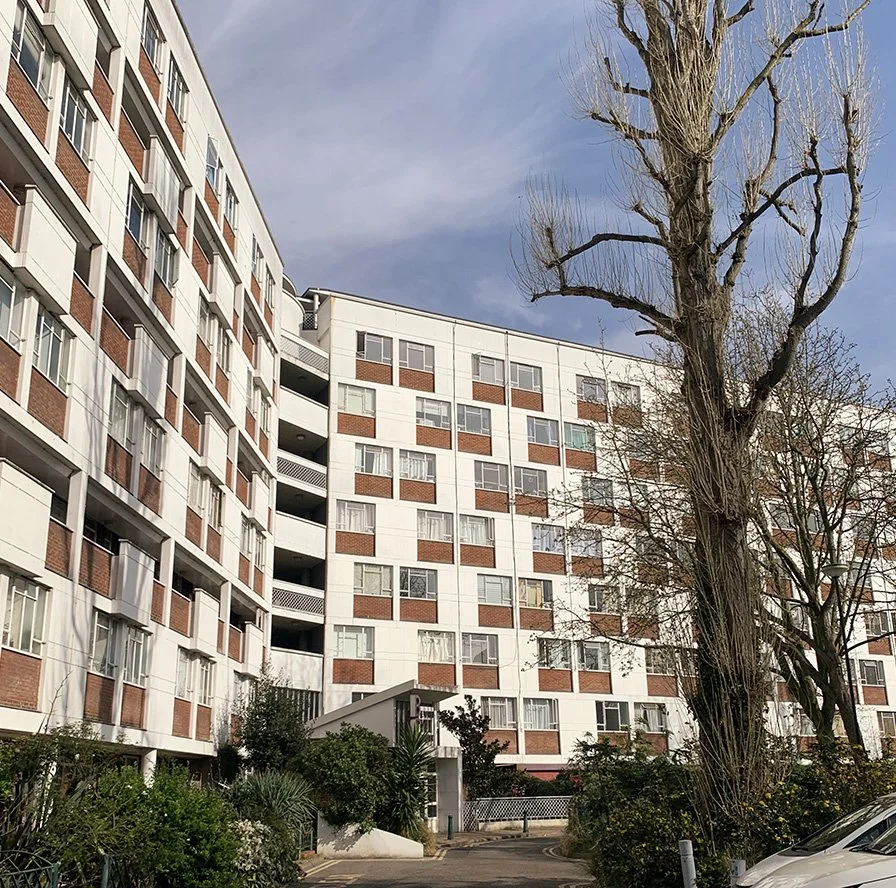
Originally designed by the renowned modernist architect Berthold Lubetkin and completed in the 1950s, Bevin Court is a Grade II* listed housing block arranged around a distinctive central staircase. The building remains an important example of post-war social housing design, and any interventions must be handled with exceptional care. At the same time, its heating infrastructure had reached the end of its operational life and required urgent replacement.
The resulting project illustrates both the technical and procedural complexities of upgrading energy systems in heritage housing - and the value of coordinated design leadership in navigating them.
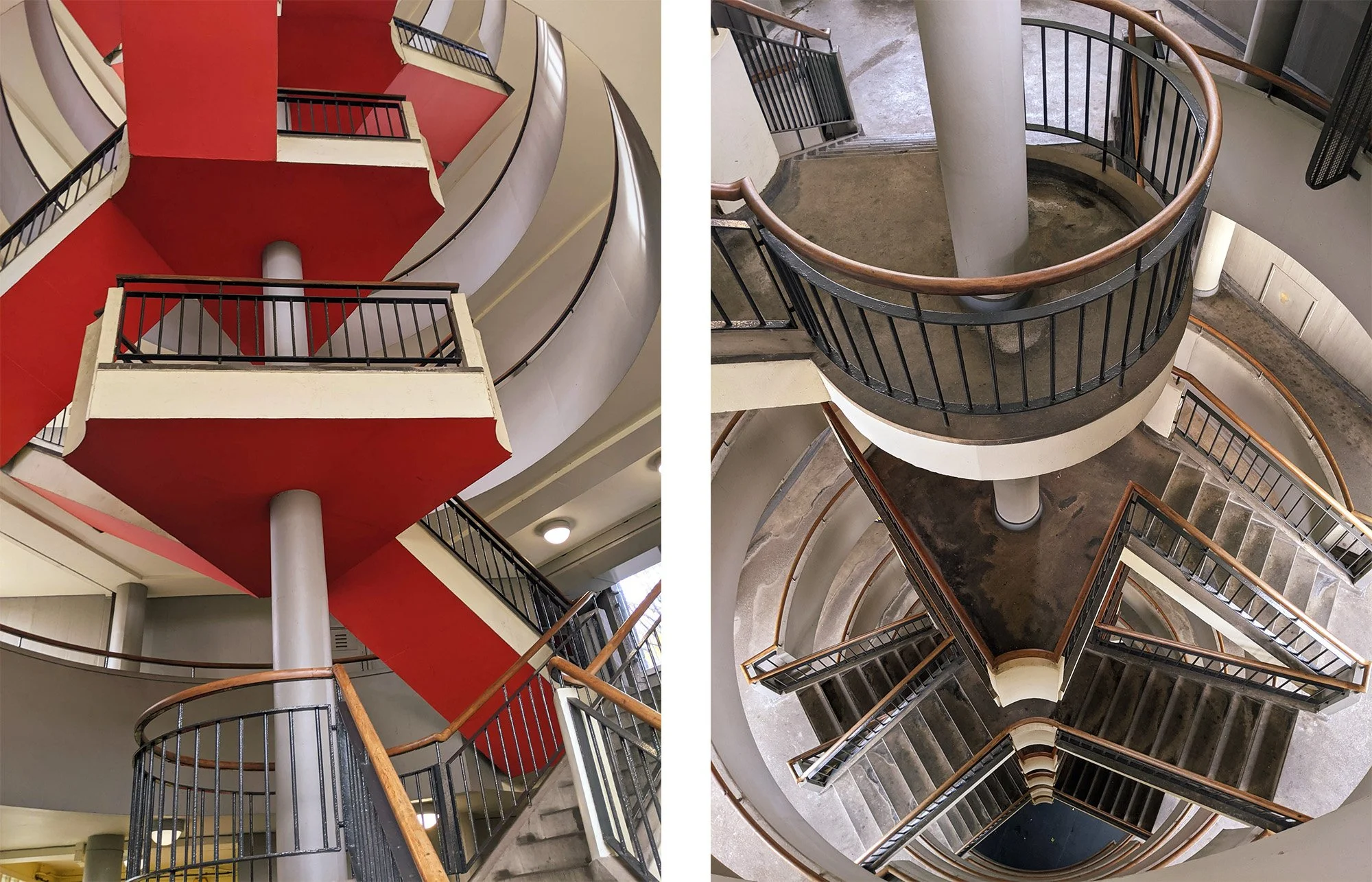
Distinctive 1950s central staircase of Bevin Court, designed by renowned modernist architect, Berthold Lubetkin.
The challenge: upgrading ageing heating infrastructure
The starting point at Bevin Court was a familiar one. The building’s existing communal gas boilers had reached the end of their useful life and were becoming increasingly inefficient. Replacing them offered an opportunity not only to improve reliability but also to support Islington Council’s wider strategy to decarbonise its housing stock – while reducing energy costs for residents and improving overall system performance.
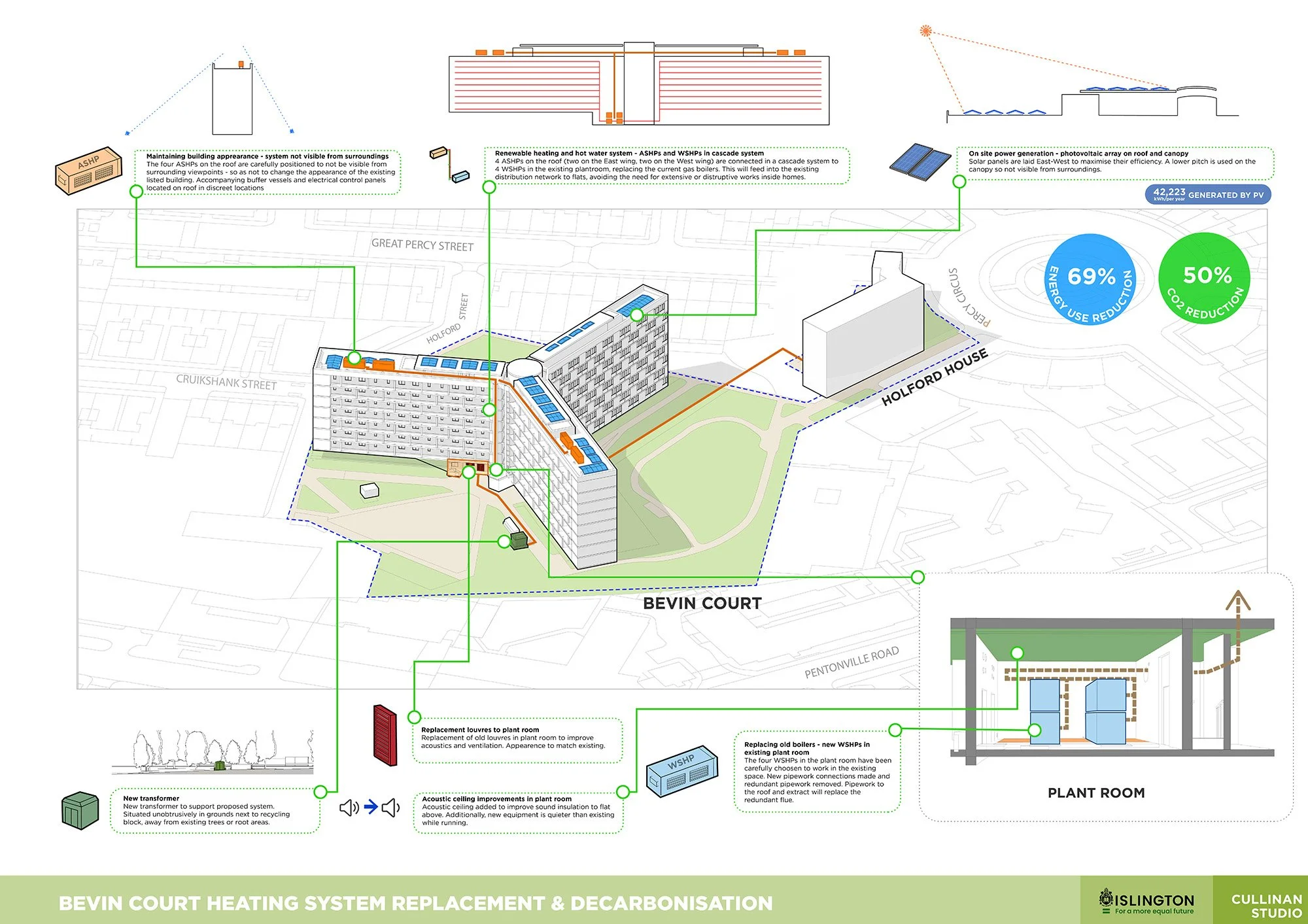
The upgraded system will ultimately supply heating and hot water to 115 flats at Bevin Court and a further 12 maisonettes in the adjacent Holford House, replacing the old communal gas boilers with a low-carbon heat pump system.
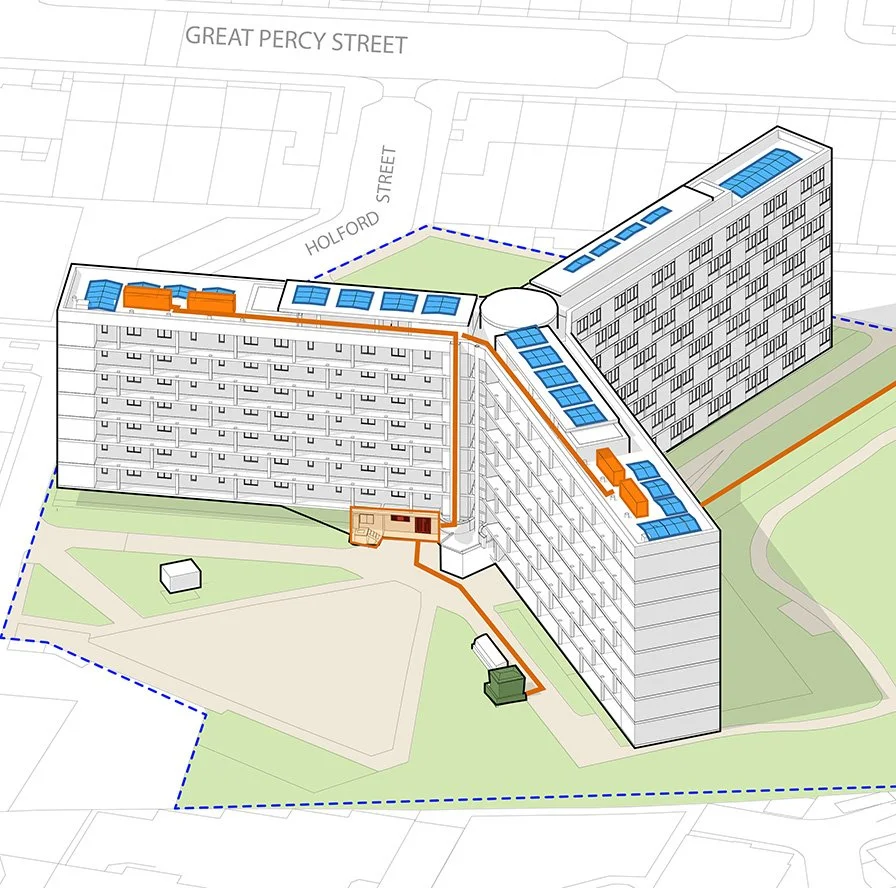
The proposed system centres on heat pumps. Water-source heat pumps are located within the existing plant room, while three air-source heat pumps are positioned on the roof, carefully located behind existing parapets to minimise their visual impact. Working together in a cascade arrangement, these systems supply heat to the building’s existing communal pipe network, providing heating and hot water for the flats.
Within individual flats, gas boilers are replaced with heat interface units (HIUs), enabling residents to connect to the centralised system. Installation of the HIUs is now well underway, and early indications from the client suggest that the new system is already delivering tangible benefits. Initial data indicates an almost 40% reduction in energy usage, alongside improved hot water performance reported by residents.
Photovoltaic panels are also installed on the roof to contribute to the building’s electricity supply, while a new electrical substation increases the electrical capacity required to support the heat pump infrastructure.
Technically, this approach is increasingly common. What makes Bevin Court unusual is the context in which it must be delivered.
Working within a Grade 2* listed building
As a Grade II* listed building, Bevin Court is subject to stringent heritage protections. Any visible alteration to the building’s external appearance requires careful justification, and proposals must demonstrate that the environmental benefits outweigh any potential harm to the building’s architectural character.
In practice, this meant that the design team’s first task was not selecting equipment but understanding how it could be integrated with minimal visual impact.
Cullinan Studio undertook a detailed analysis of views of the building from surrounding streets and open spaces. Using digital modelling, the team identified key vantage points and tested the visibility of proposed rooftop equipment. The aim was to ensure that new plant, including the rooftop heat pumps, would remain concealed behind existing parapets wherever possible.
Existing infrastructure was also reused where feasible. A former flue route that previously served the gas boilers is now used to connect the plant room to rooftop equipment, reducing the need for additional structural intervention.
These measures helped demonstrate that the proposed retrofit would have minimal impact on the building’s historic character – a critical factor in securing planning approval.
Coordination across complex regulatory frameworks
While the architectural heritage of Bevin Court placed constraints on the design, the key challenges in the delivery process were regulatory.
Like many retrofit projects in existing housing blocks, Bevin Court must navigate a wide range of statutory and technical requirements. These include planning and listed building consent, acoustic assessments, biodiversity net gain requirements, party wall agreements, and coordination with utilities providers.
As part of the scheme, new planting and landscape improvements will deliver a 10% biodiversity net gain, reflecting the increasingly broad environmental scope of contemporary retrofit projects.
The introduction of the Building Safety Act has added another layer of complexity. As a high-rise residential building, Bevin Court now falls within the new Gateway approval process overseen by the Building Safety Regulator. This requires detailed design information to be submitted and approved before construction can proceed.
While these frameworks are designed to improve safety and environmental outcomes, they also significantly increase the early coordination required on retrofit projects.
For this reason, Cullinan Studio’s role has extended beyond conventional architectural design, and the practice has effectively acted as a project coordinating lead, working with engineers, contractors, heritage consultants, arborealists, planners, and the client team to ensure that all technical, regulatory and spatial requirements are simultaneously met.
This kind of coordination is particularly important on projects driven by mechanical and electrical upgrades. Engineering teams may naturally focus on equipment performance and system design, but successful retrofit in complex buildings requires equal attention to spatial integration, planning constraints and stakeholder engagement.
Integrating evolving technologies
Another characteristic challenge of energy retrofit projects is the pace of technological change.
Heat pump technologies and associated infrastructure are evolving rapidly, and design teams must balance the advantages of emerging solutions against the practical realities of project delivery. On long-running projects, new technologies can appear mid-process, raising questions about whether strategies should change.
At Bevin Court, maintaining a clear strategic direction, while allowing appropriate flexibility, has been essential to ensuring progress. Early engagement with contractors and engineers has helped the team understand installation requirements, structural implications and operational constraints, reducing the risk of significant redesign later in the process.
Lessons for local authorities
Although Bevin Court has its own specific challenges, the project highlights several broader lessons for local authorities considering similar heating upgrades.
1. Understand the wider system strategy
Replacing boilers approaching the end of their operational life should be seen as part of a long-term energy strategy rather than a standalone intervention. Councils increasingly need to consider how individual buildings will connect to future district heat networks and wider decarbonisation plans.
2. Address heritage and planning issues early
For listed or architecturally significant buildings, early analysis of visual impact, equipment location and structural interventions can prevent delays later in the process.
3. Coordinate engineering and architectural priorities
Mechanical and electrical systems must work efficiently, but they also need to integrate with existing buildings and urban contexts. Clear coordination between engineers, architects and planners is essential.
4. Engage regulatory requirements early
New legislation such as the Building Safety Act mean that regulatory approvals must be considered from the outset of design.
5. Expect evolving technologies
Renewable energy technologies are changing rapidly. Designs should allow enough flexibility to accommodate improvements without destabilising project delivery.
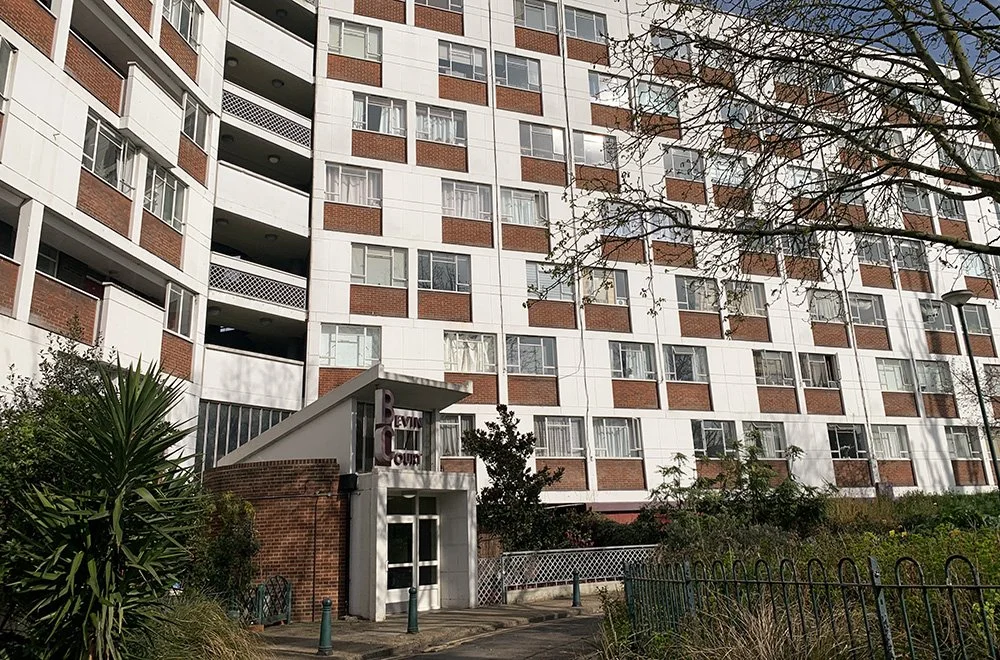
Main entrance to the Grade 2* listed Bevin Court in the London Borough of Islington, designed by Berthold Lubetkin in the 1950s.
What regulatory and technical issues need to be considered when retrofitting communal heating systems?
Projects of this type typically need to consider a range of regulatory, technical, and stakeholder requirements, including:
‣ Planning permission for rooftop plant, infrastructure, and associated external works
‣ Listed Building Consent where buildings have heritage protection
‣ Heritage impact assessment to ensure interventions respect historic fabric and character
‣ Building Safety Act Gateway approvals for higher-risk residential buildings
‣ Biodiversity Net Gain (BNG) requirements, including landscape improvements and new planting
‣ Acoustic assessment to manage potential noise from rooftop heat pumps or other plant
‣ Electricity network upgrades, including coordination with the distribution network operator and potential installation of a new substation
‣ Party Wall agreements where works affect neighbouring structures or shared boundaries
‣ Resident consultation and engagement to ensure occupants understand the changes and installation process
‣ Integration with existing building services infrastructure, including plant rooms, pipework routes, and internal heating systems
‣ Review opportunities for fabric improvements and on-site energy generation as part of the upgrades to maximise benefits
Projects such as Bevin Court demonstrate that successful retrofit depends not only on engineering design, but also on careful coordination across planning, regulatory, and stakeholder processes.
A growing national challenge
The challenges encountered at Bevin Court are far from unique. Across the UK, thousands of housing blocks built in the mid-twentieth century rely on legacy communal heating infrastructure, serving hundreds of homes, that will soon require replacement.
For local authorities, the task is not simply technical: it requires balancing decarbonisation targets, heritage protection, resident needs and an increasingly complex regulatory landscape.
Projects such as Bevin Court demonstrate that these challenges can be addressed through careful coordination and clear strategic planning. Even within highly protected heritage buildings, it is possible to introduce modern low-carbon heating infrastructure that both preserves architectural character and delivers measurable improvements in performance for residents.