ISAAC NEWTON INSTITUTE, UNIVERSITY OF CAMBRIDGE
A collegiate campus addition designed to unlock creative thinking
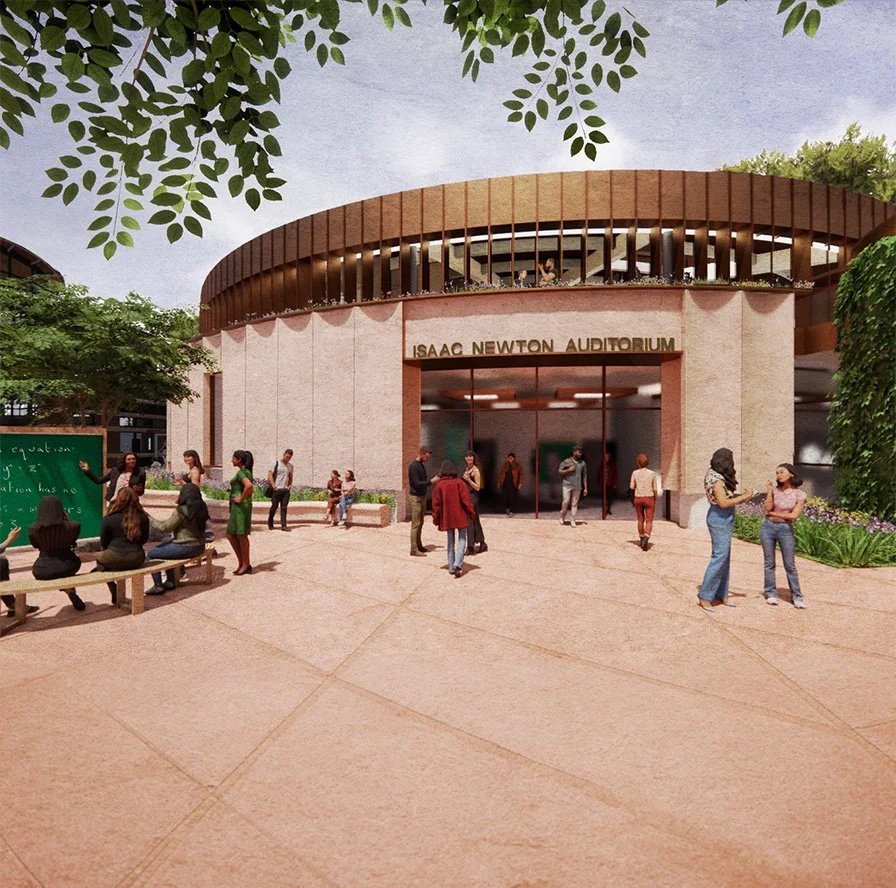
Project Insight
The Isaac Newton Institute (INI) was established in 1992 as a place for mathematicians from across the world to gather, research and exchange ideas. The INI building now sits as one among many pavilions gathered around a courtyard and shared facilities within the Centre for Mathematical Sciences campus designed by our practice in the late 1990’s.
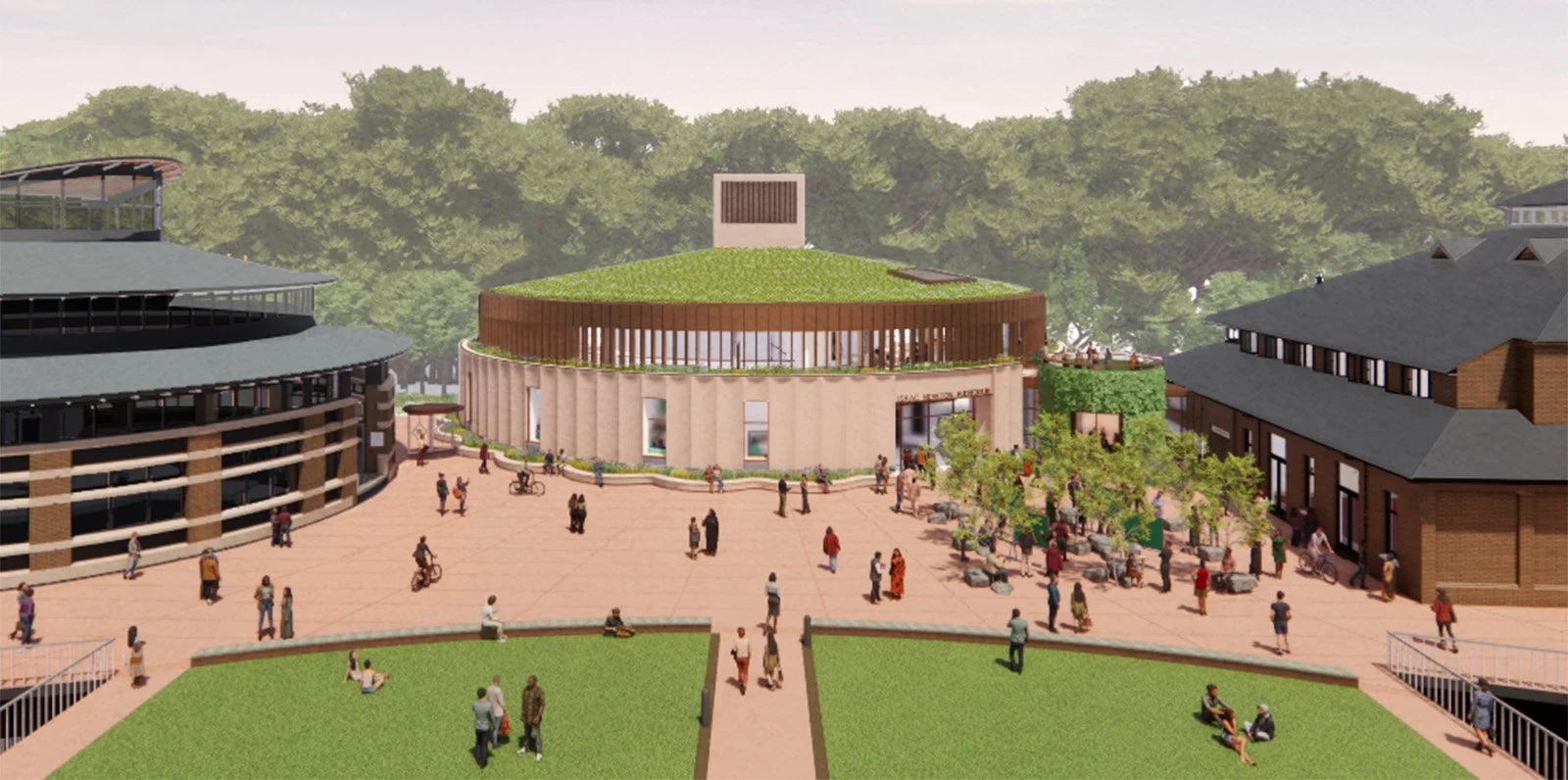
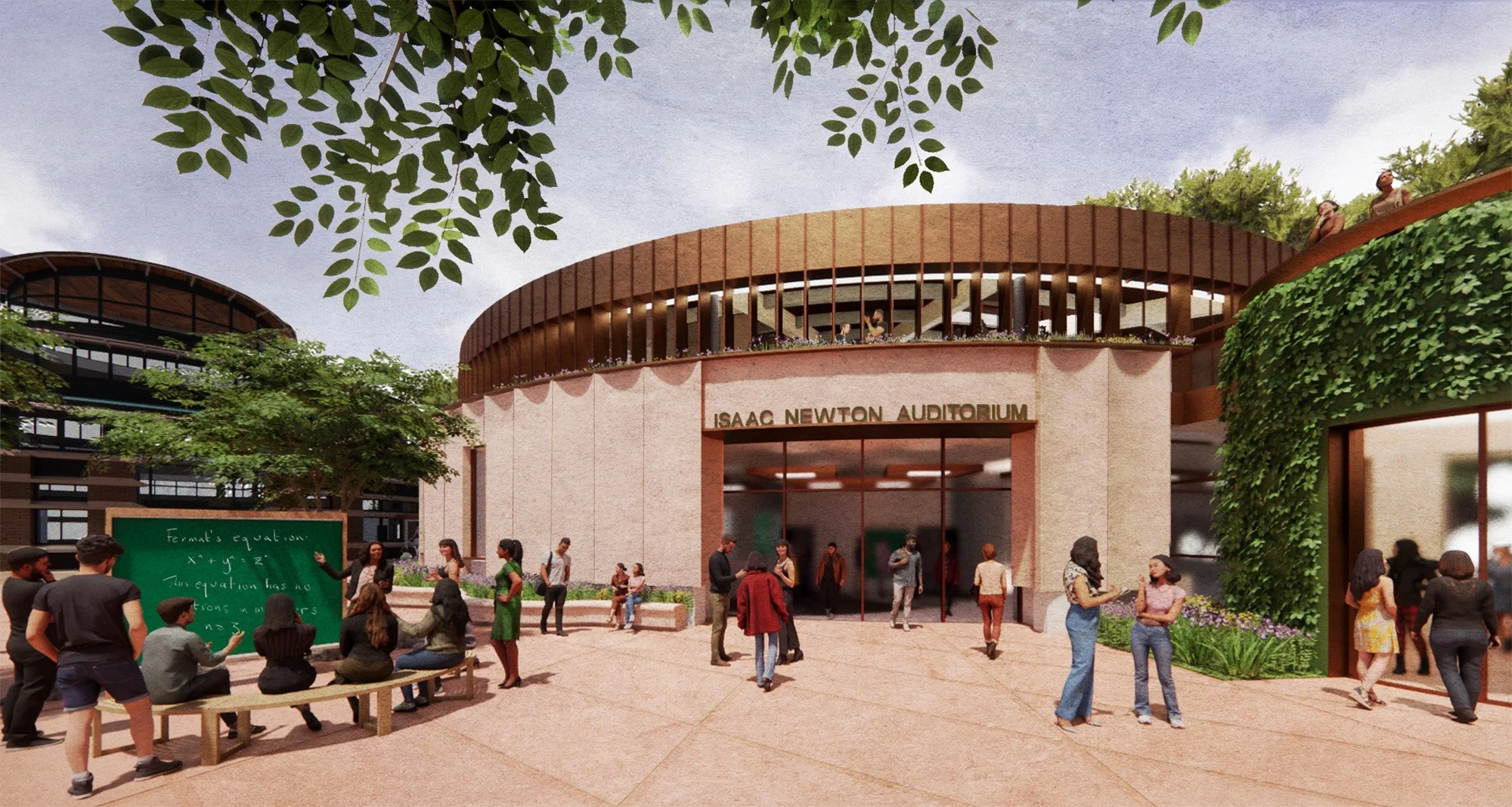
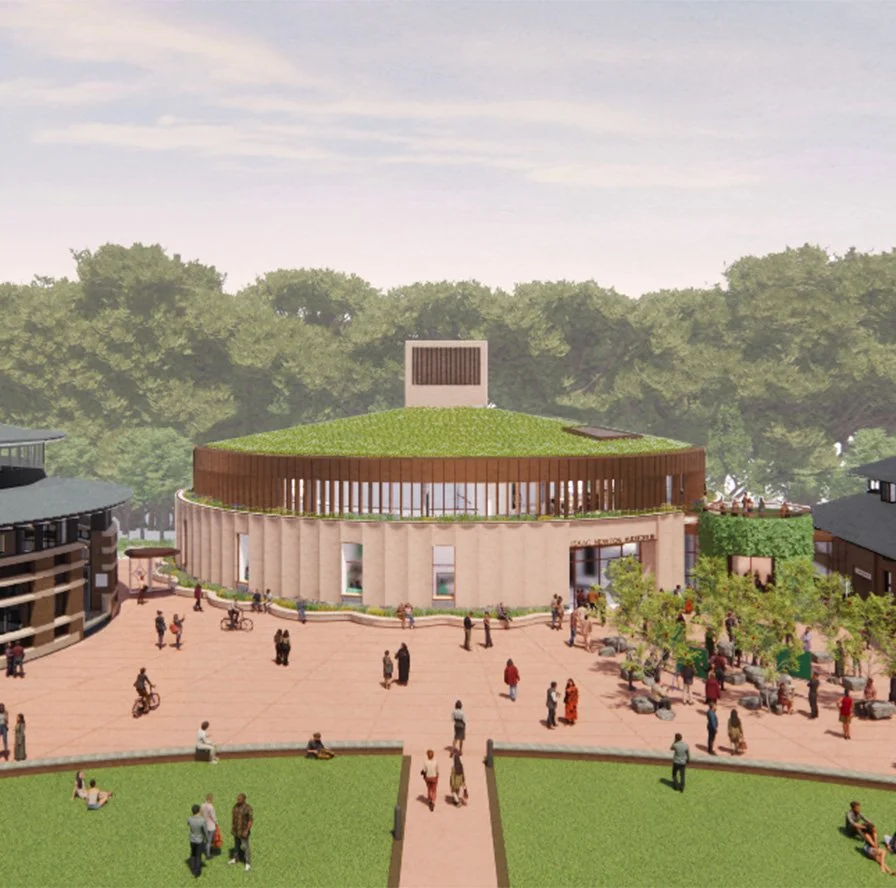
But as a victim of its own success, the INI now needs more space; a purpose-built flexible lecture theatre with breakout, event and study spaces and a clearer way for students and researchers to arrive and connect. Careful consideration and a sensitive approach to the geometries of the existing campus, have resulted in a new pavilion that pinwheels round a central stair and lift tower, contained by a wriggling wall and opening onto the courtyard. The entry sits in a glazed link building and forms an upper terrace to the study spaces above. The new building will improve the Institutes ability to host talks, new kinds of events and a richer mix of research study spaces.
Project Idea
We collaborated with the University of Cambridge Estates Division and the Isaac Newton Institute from the outset to allow the building design to settle into the existing campus as a formal response to the geometry of the layout, with walls and eave levels tying in with the Betty & Gordon Moore (BGM) library and the existing pyramid volume of the INI.
The architecture is scaled to the campus, shaped by movement, and flexible enough to adapt as the Institute continues to evolve. In plan, it acts as a joining element between neighbouring buildings, enhances wayfinding, and opens to external terraces and outdoor study rooms.
Project Design
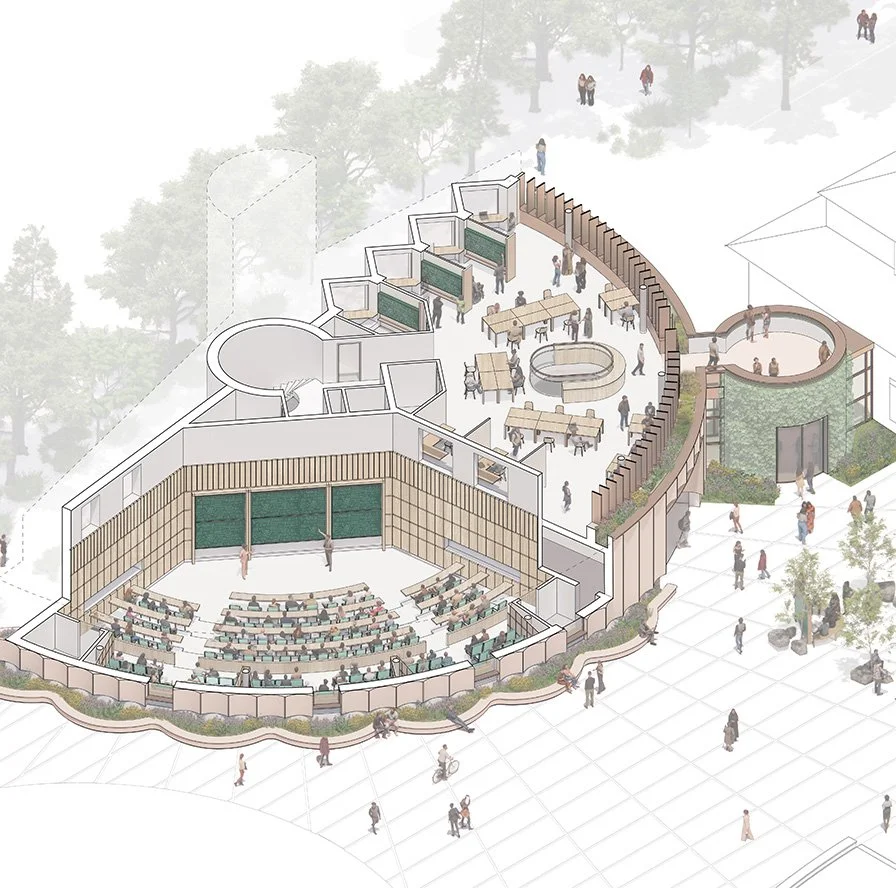
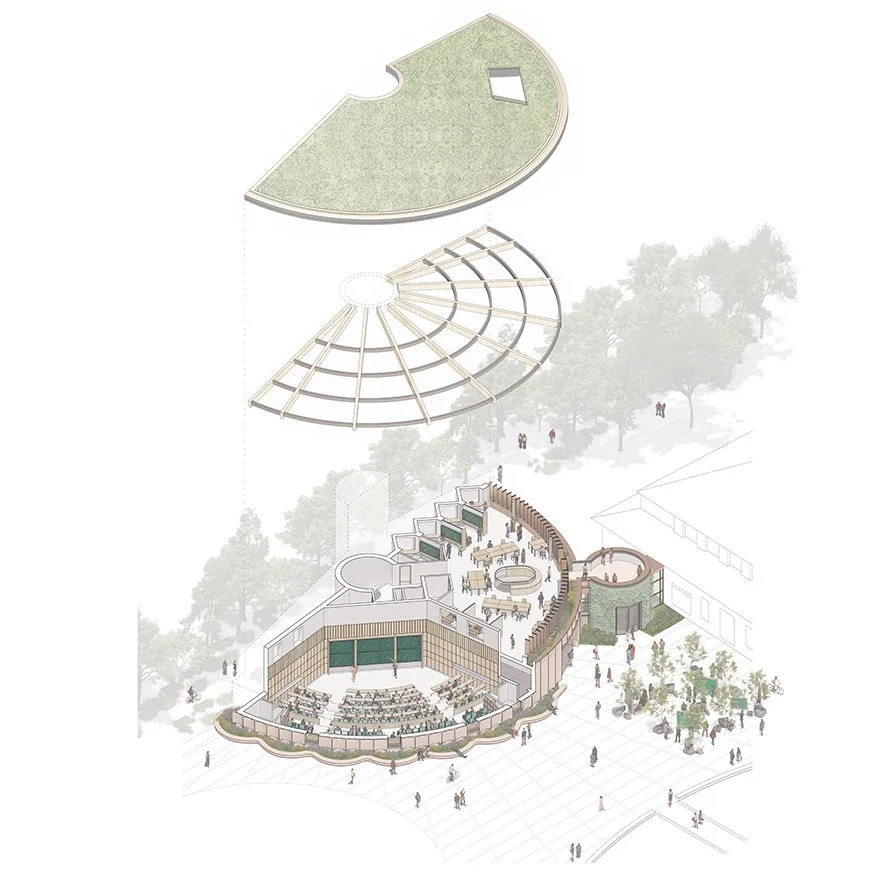
The project aims to deliver a tailored spatial provision, that responds to the calibre of the visitors and academics the INI’s programmes attract, and which is both highly specific to the mathematical settings required, yet flexible enough to allow high levels of occupancy and versatility of function. The consistent massing of the proposal has two distinct halves which sit below the consistent timber roof structure.
To the south, a flexible breakout space at ground floor which mediates between, exhibition, lecture theatre entry, discussion rooms, circulation and supporting facilities with a semi-open plan office space above that creates a range of study and discussion environments within one space, accessed via the central circulation stair.
To the north, the lecture theatre extends up into the same volume, offering a tall, light space which is civic in nature, and which creates the opportunity for an upper-level discreet viewing gallery for the resident academic community.
The massing and façade approach is informed by the DNA of the current campus, more solid and tactile at ground level with carefully placed openings, with a lighter and visually recessive upper level to reduce the scale of the mass. In developing the project further, there is an intent to utilise high quality timber and low carbon construction materials wherever possible and to achieve a cohesion with the existing INI building interior and a harmony with the strong principles of the campus masterplan.