What three capital projects taught us about a better way to build



For estates directors navigating tight budgets, sustainability commitments and complex briefs, Integrated Project Insurance (IPI) offers a genuinely different approach. The Cullinan Studio team reflects on three completed projects with Dudley College of Technology, and on what Steve Johnson, the College's Executive Director of Estates and Capital Projects, learned along the way.
"In my view, every major construction project should be delivered using the IPI model. Nothing else matches it for collaboration, clarity, and end-user focus." - Steve Johnson, Executive Director of Estates and Capital Projects, Dudley College of Technology
Running a capital programme in further or higher education means managing pressures that rarely align neatly. Sustainability targets sit alongside constrained budgets and falling roll numbers. Ambitious briefs meet cautious finance committees. And by the time a contractor is on site, the decisions that really shape a project, such as cost, design and environmental performance have often already been made by the early stage design team.
The consequences are familiar. Projects that end in arbitration. Reserves set aside for claims that were never resolved. Buildings that arrive on site already compromised by value engineering. Cullinan Studio has seen this at first hand, and so has Steve Johnson.
Before working with Cullinan on the IPI model, Dudley College of Technology had delivered a series of major projects via design-and-build which ended in considerable cost overrun and arbitration. The College was forced to set aside a large reserve. The experience left a lasting impression and a determination to find a better way.
Integrated Project Insurance, or IPI, changes this dynamic. It brings the full project team together from the outset: client, designer, contractor and specialists working under a shared insurance policy, with aligned incentives and a common goal. While IPI isn’t a new idea, it remains underused, partly because it asks more of everyone involved, and partly because the construction industry defaults to familiar procurement and contractual structures, regardless of the all too familiar problems and frustrations that this produces time and again.
Cullinan Studio has now delivered three exceptional projects using IPI alongside Dudley College of Technology: the Black Country & Marches Institute of Technology, the Animal Studies Centre, and Health Innovation Dudley. These completed buildings are a clear demonstration of how projects can be delivered differently. The lessons from them are practical, specific, and transferable.
What follows is an honest account of how IPI changed the process, and what it asked of the teams involved.

The Black Country & Marches Institute of Technology in Dudley
How IPI works in practice
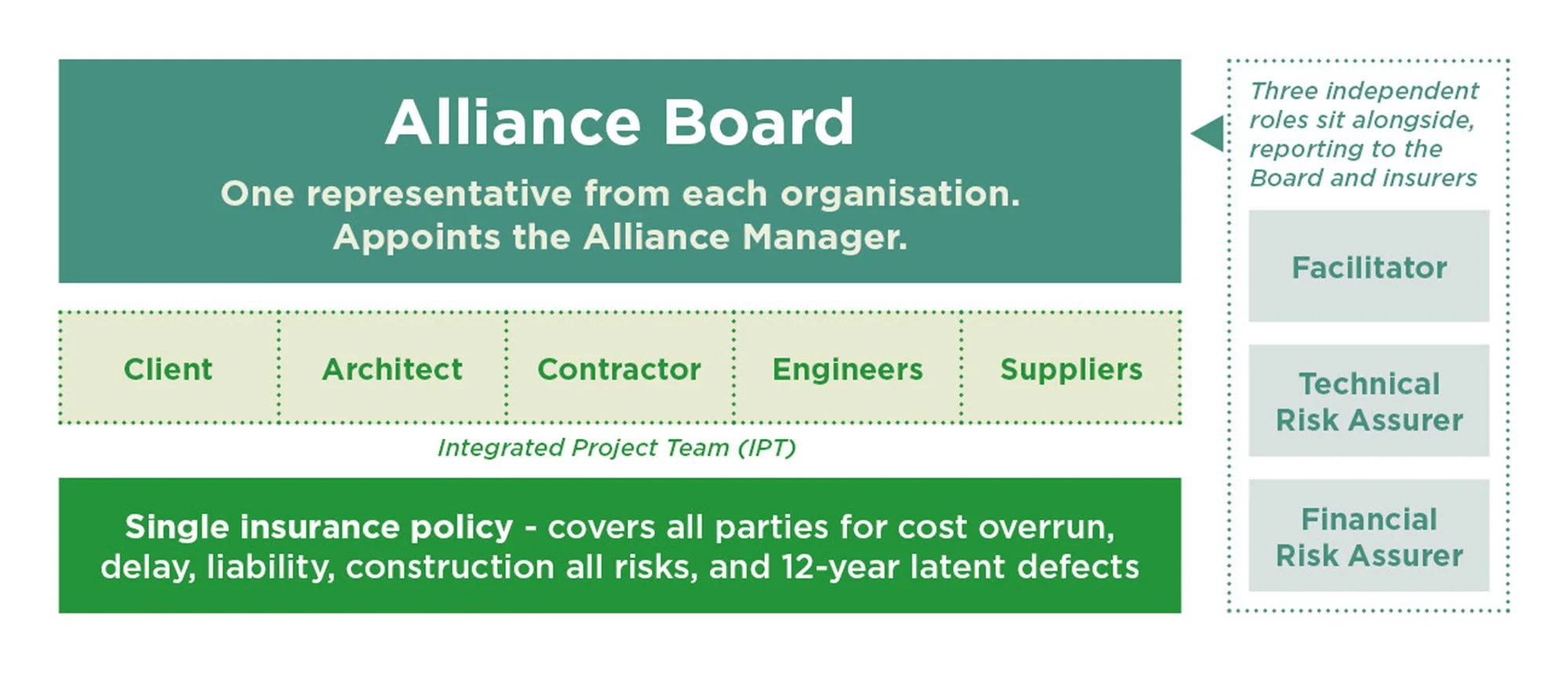
IPI brings the full project team together under a single shared project insurance policy from day one. Client, designer, contractor and specialists all work as one alliance, governed by a shared Alliance Board. The diagram below shows how that structure sits together.
What the structure makes possible is a genuinely different relationship with risk. Rather than each party protecting their own position, one policy covers the alliance collectively including cost overrun, delay, liability, construction, all risks and latent defects for twelve years from completion. The no blame, no claim principle works because individual parties have no right of subrogation with their alliance partners, so are no longer financially exposed in the way they would be under a conventional contract.
Critically for clients, the maximum possible cost exposure is known from day one, as the percentage of any overrun is fixed within the insurance structure. There are no open-ended surprises to present to a finance committee later.
Team selection also works differently. Partners are assessed on behaviours and collaborative mindset, rather than just technical credentials, through workshops that simulate real project scenarios. Steve Johnson was sceptical of this process before he experienced it.
"Those sessions really do reveal who is likely to collaborate and who isn't."
The model asks more of the client than a conventional route. You take a seat at the Alliance Board. You make decisions rather than receive updates. That is a different kind of engagement, and it is precisely why the outcomes tend to be different.
How the Alliance is structured
1. Better outcomes for people and planet
Across all three projects, one theme comes through clearly: IPI creates the conditions for better decisions, particularly around sustainability and where buildings can deliver most value for the people using them.
The IPI model recognises that not all project requirements and risks can be known or fixed at the outset. Instead, it encourages a process that focuses on understanding when decisions need to be made, who should be involved , and what information is needed to make the most informed decision at that point in time. This allows space for opportunities to be properly explored, project stakeholders to be meaningfully engaged and consensus of what is ‘best for project’ to be established.
At the Animal Studies Centre, the most consequential decision was initiated at the outset. The project began with a brief to demolish two existing buildings and build new. Under a conventional route, that brief would likely have been followed through. Instead, the idea of retrofit was raised, and the alliance allocated time to step back and ask whether the brief itself was right.
Working collaboratively, the team demonstrated that the required spaces could be delivered effectively, within one of the existing buildings, for the same overall project cost. The ultimate result was a shift from demolition to retrofit, but it was not an obvious route. Retrofit carries the uncertainties of unknown conditions, tighter constraints, and the obvious disadvantage of 20% attributable VAT. It was a calculated risk that the alliance chose to take on and manage, based on the potential for significantly greater environmental outcomes and the opportunity to benefit from the character and qualities of the existing building.
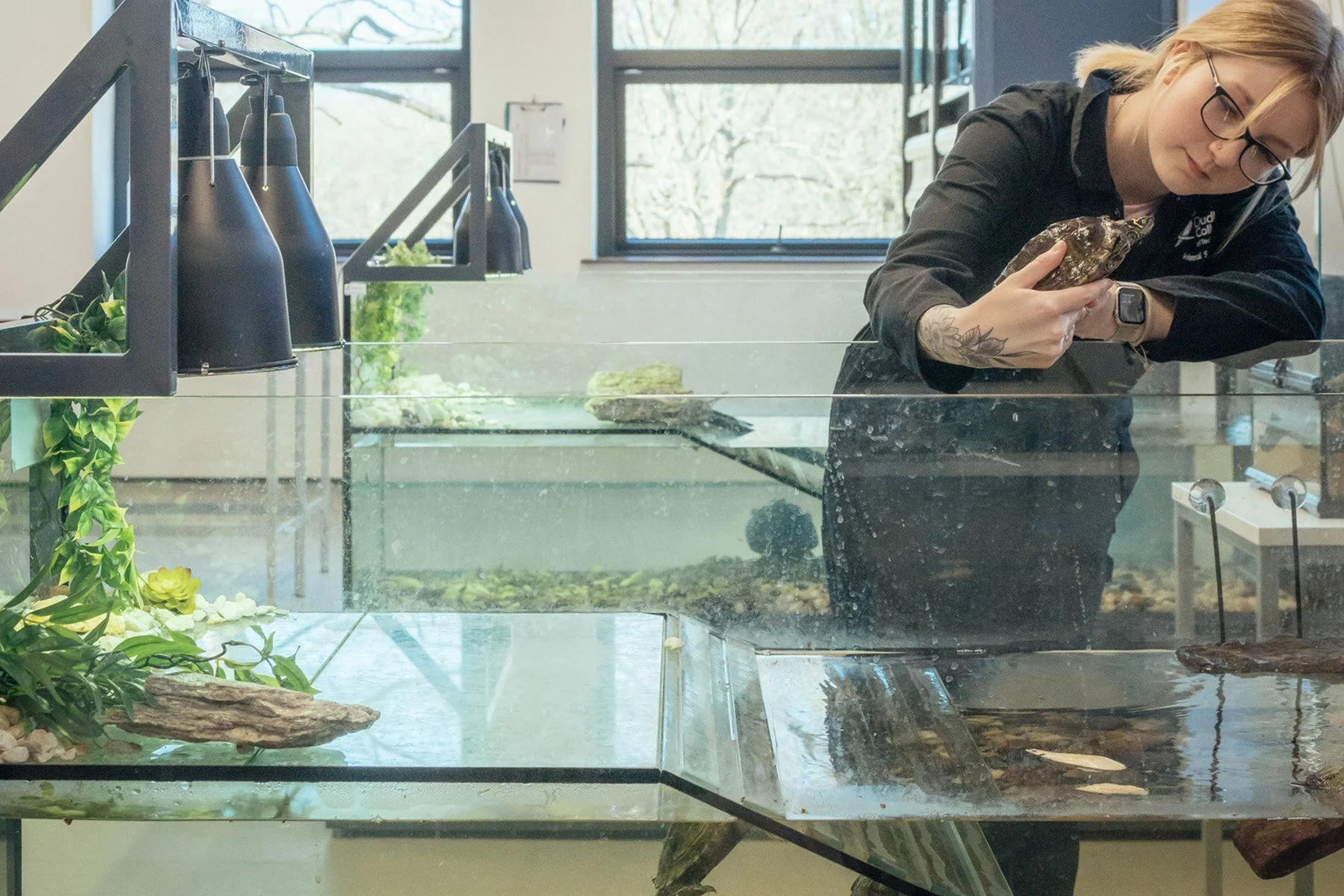
Animal Studies Centre at Dudley College of Technology
This decision was underpinned by a period of initial analysis where early quantities were extracted from the 3D model to inform the cost plan, and risks were not only identified but were costed and factored based on likelihood. As the project evolved, the alliance worked fluidly across disciplines, conducting a careful analysis. Using a shared approach through PHPP (Passive House Planning Package) modelling, the team assessed the relative benefit of each potential environmental upgrade, with an associated evaluation of cost and programme implications to identify the most effective solution. Finding the ‘sweet spot’ of each component , showed that greater environmental gains could be achieved by prioritising improvements to air-tightness, rather than the U-value beyond a certain point. This enabled the project strategy to evolve through a balance of rigorous testing and practical consideration of the implications of differing approaches.
A willingness to challenge the brief — and to follow the implications through — is a recurring theme of IPI. At BC&MIoT, the building form itself was shaped through early collaboration between designers, engineers and acoustic specialists. A T-shaped plan created sheltered courtyards, allowing naturally ventilated classrooms, protected from a noisy road on the site’s western edge.
“We worked with the contractor, engineers and acoustic specialist to explore through digital modelling which form would meet the requirements and crucially where the limits of performance were in terms of the height and length of the protective element, so that we could develop the project and continue to edit the extent of this with other parameters, whilst being confident of performance” recalls Carol Costello
In both of the above examples a building design wasn’t appraised or checked by the technical requirements and then made to work. The performance parameters were tested and understood, then in turn directly utilised to inform the building design and project strategies which came forward. IPI allows the ability to shape project process in this way and focus on decisions driven by expertise and knowledge.
2. IPI: A tailored approach for each project
IPI is often described as collaborative — but what does that actually mean in practice? One consistent answer across all three projects is that it allows teams to do exactly what is needed, in a tailored highly effective way, focussing collective effort directly toward potential future value for building users and owners alike.
The typical RIBA stage based approach to a project is re-imagined, based on a collectively authored project programme which charts the most effective course from the defined project need, to the realisation of the project. This ensures highly integrated workflows and reduction of process waste, but also results in the ability to be nimble and amend the trajectory of the project in response to factors which materialise.
This ability to tailor working methods, scope of work for all parties and the flexibility to re-define the brief to quickly respond to opportunities which arise, all bear fruit in IPI projects. At the Animal Studies Centre, close collaboration with the cladding supplier from the start allowed the façade to be developed as an iterative design exercise. By working directly with fabrication constraints and material sizes, the team reduced cladding wastage from around 30% to 15%.
Tom Bradley highlights the significance of this: it not only reduced material waste, but “unlocked a typically hidden cost, which could then be redistributed back into the wider project budget.”
IPI reduces duplication of effort. Rather than multiple parties producing parallel sets of detailed drawings, design intent can be developed collaboratively, with specialists contributing their expertise directly. On the Animal Studies Centre, this meant relying on supplier-led detail development, with the design team focusing on the design decisions that required their input rather than redrawing standard details.
In a similar way, a targeted focus on scope overlaps and interfaces has yielded considerable project benefit, the most noticeable examples of this are the ‘Build in a day’ workshops where a 3D simulation of the construction sequence is run and reviewed by the team. Being incentivised by a common goal, the project alliance and suppliers have managed to re-sequence works to great effect.
Richard Pulford describes the impacts of this process: “Just by engaging suppliers with open questions, understanding where their typical pain points are, and asking them together to help see the opportunities for organising things differently, we saw fantastic results. One workshop saw us save 4-5 weeks on the project programme, by amending the project sub-phasing and developing a more nuanced and hand-in-hand approach between the electrical and partitions suppliers. A bit of time taken to facilitate the conversation, yielded significant savings in terms of site setup costs.”
Similarly, early consideration of site logistics before planning submission at BC&MIoT led to a seemingly minor adjustment: shifting the building footprint by around five metres. “This change was entirely insignificant to the success criteria of the building design, but made a big difference to logistics,” says Carol Costello. The result was a meaningful reduction in programme risk and a saving in otherwise embedded preliminaries costs. Under a conventional route, that insight would almost certainly have emerged later, and at a cost.
Perhaps the clearest illustration of IPI’s flexibility is the project that never happened. Without the IPI model, the Animal Studies Centre would almost certainly have been delivered as a new-build scheme. As Tom Bradley puts it, “we believe the project simply wouldn’t have existed in its current form without IPI.” A new-build scheme became a retrofit, was delivered to the same budget (including the applicable VAT for retrofit), with a substantially better environmental performance and lower carbon footprint than otherwise would have been achieved.
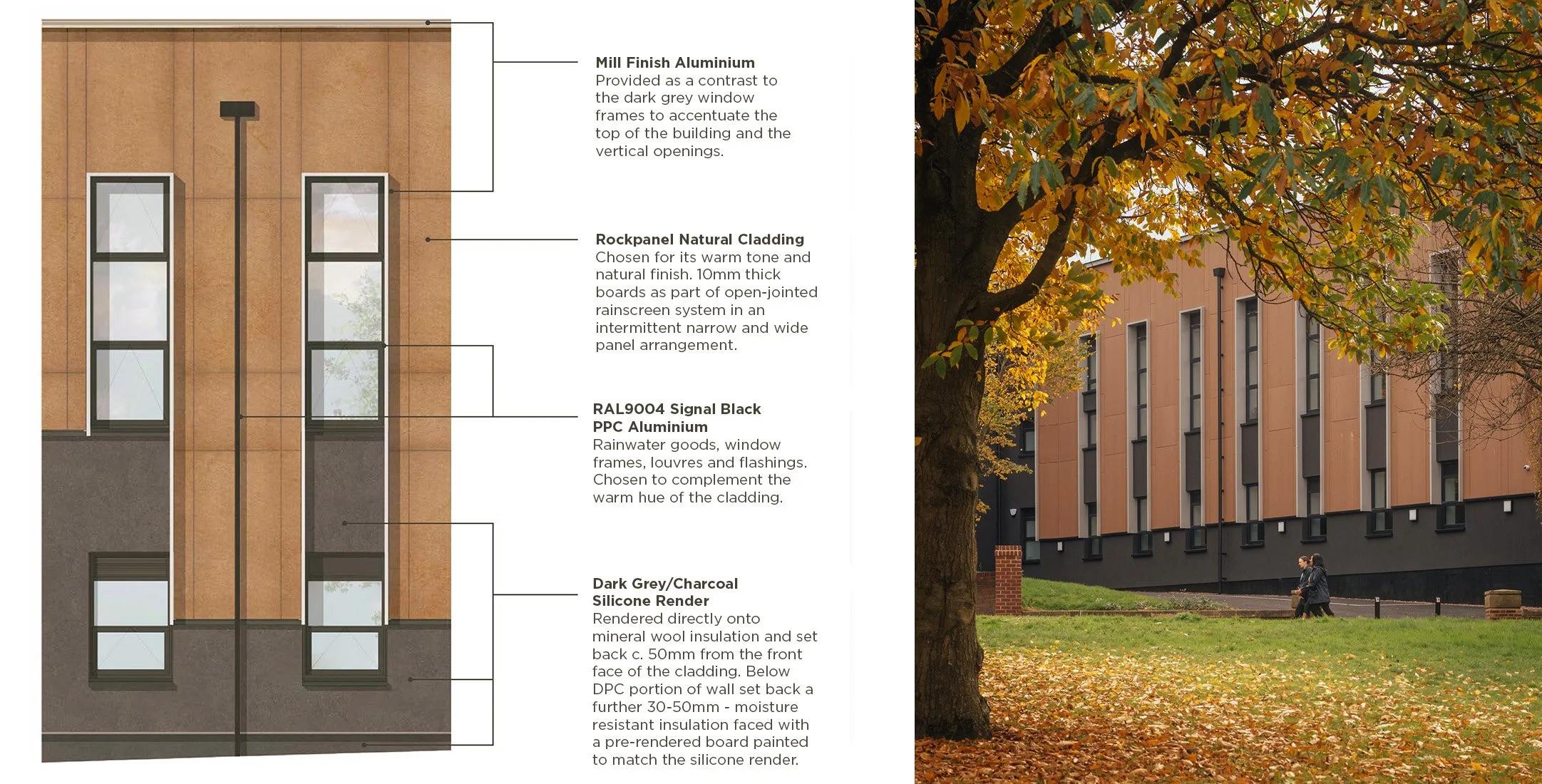
New facade of the refurbished Dudley College building, now home to the Animal Studies Centre.
3. The cost plan as a design tool
If IPI changes one thing most significantly, it may be the relationship between design and cost.
In conventional procurement, cost is treated as a constraint applied after design decisions are made. A scheme is designed, priced, and then scaled back. Valuable work is discarded which often leads to frayed relationships. The building that gets built is a reduced version of what was intended, and everyone involved knows it.
With IPI, it works differently as cost becomes a part of an active design process – tested, explored and refined alongside the design itself, with absolute open book transparency and consistent collective management.
At BC&MIoT, cost data was embedded within the digital model, allowing the team to test different façade compositions in real time.
Carol Costello emphasises the importance of this visibility: “knowing the real costs from the supplier meant we could refine the design to an optimal outcome while hitting cost targets.”
The team was not choosing between design quality and budget, they were using live cost information to achieve both.
At Health Innovation Dudley, the relationship between design and cost was made explicit in presentations to the client. Visualisations were accompanied by supply and installation costs, which allowed decisions - such as the extent of timber panelling in the atrium - to be made with full visibility of their financial implications, rather than being deferred. This level of transparency changes behaviour. Abortive work reduces, because decisions are made with the right information at the right time. Trust builds, as all parties are working from a shared understanding of what things cost, and what they are worth, including trade-offs.
In collectively engaging intimately with the project costs, it necessitates a much more focussed and proactive approach to managing opportunities and risk. Each specific item is appraised, with opportunities and risk owned by the party who has the most ability to manage them, but these are fundamentally shared and understood. The healthy focus around this in IPI, has consistently proven the old adage that a problem shared is a problem halved, with clear strategies put in place to mitigate risks and deliver potential opportunities.
Daniel Bianchi describes a particular risk scenario from the HID project: "Part of the project site was under a compulsory purchase order which had not been processed at the same time as the rest of the site. When each company viewed their risk individually - it seemed insurmountable. The existing local sensitivities surrounding the site would be exacerbated, contractor costs could be driven up due to a delayed start on site, the designer fees to work out a new building footprint for 2/3rd of the site would undo a lot of good work... any one of these factors would delay more conventional projects for months or even see the project fizzle out. But with a shared approach - opportunities were found!
“The designers set to work on a phased steel structure, the contractor explored a new logistics plan with early subcontractor engagement, and this combined process chipped away at the risks to the point where a huge opportunity was gained to keep on programme and deliver the building in time for the client's completion date. Holistic problem solving - the individual risks did not compare to the huge benefits of keeping the project on track for everyone!"
A focus on cost and ultimately value, absolutely doesn’t mean a reduction in quality, just a strategic approach to it. In our experience IPI does lead to a lean efficiency, where every element of a building is justified and working hard. This rigour and honesty feels highly appropriate in the context of the climate emergency and a real strength in the projects we have delivered.
For an estates director presenting to a finance committee, there is one further point worth making explicit. Under IPI, the maximum possible cost is known from day one. The percentage of any overrun is fixed within the insurance structure. This is not a guarantee that nothing will go wrong but does provide a guarantee that the size of the deficit is bounded. This is a very different conversation to have with a board, or potential project funder, than the open-ended exposure that conventional procurement can produce.
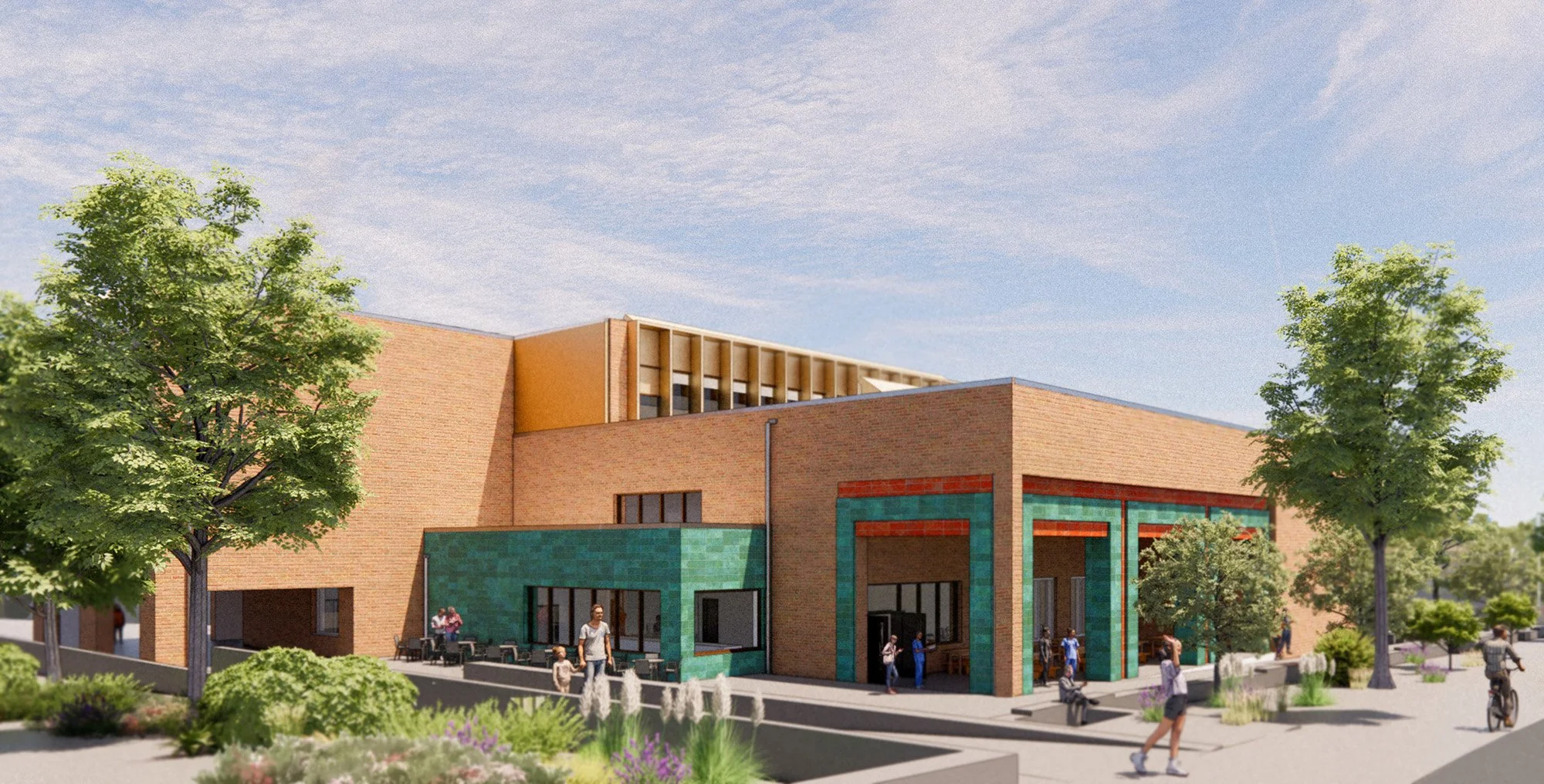
Visualisation of the Health Innovation Dudley project.
4. Not without its challenges…
IPI is not an easy option. It requires time and commitment, as well as a willingness to work differently. Clients considering using this model must be clear about what it involves.
IPI requires a change in mindset. Team members need to move away from defensive behaviours associated with conventional contracts, and towards a culture of openness, trust and shared responsibility. That doesn’t always happen automatically; usually it requires conscious effort, supported by onboarding workshops and ongoing collaboration.
Many of us are used to stepping away to develop a solution and then returning with it fully formed. A more effective approach is to share and test ideas as you go, allowing the outcome to be informed through discussion. Designing in the open means explaining the reasoning and logic behind decisions, and recognising that being challenged is a healthy part of the process that leads to stronger outcomes.
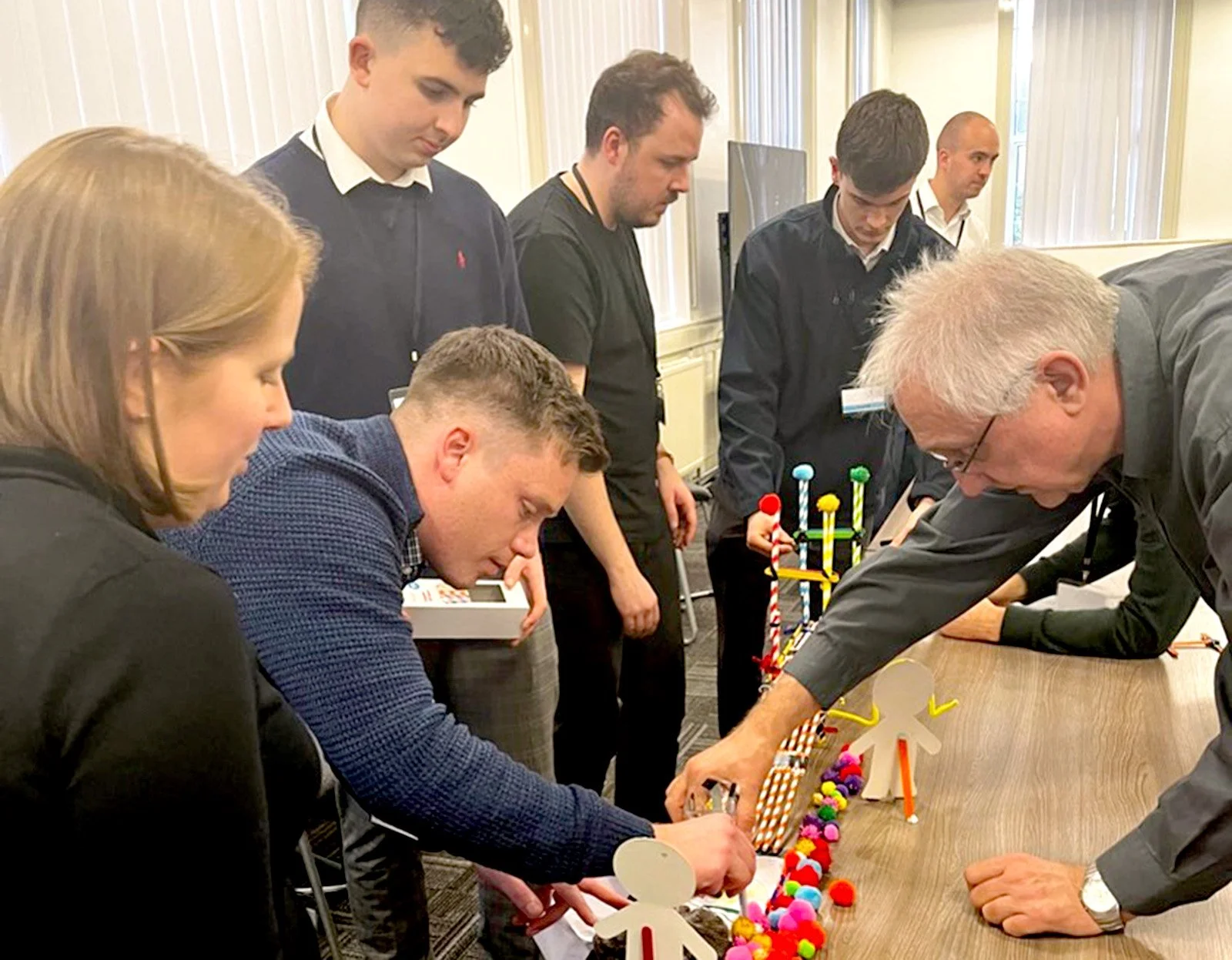
A project team building and alliance workshop in the first stages of the Animal Studies Centre project.
What this means in practice
Three projects do not make a universal blueprint. IPI works well when the client is prepared to invest time and engagement at the front end, when the team is willing to move past the defensive habits that conventional contracts encourage, and when collaboration is given enough structure to actually function. When those conditions are met, the results speak for themselves: projects that challenge the brief, reduce waste, hit budget and deliver buildings people want to use.
The construction industry will default to familiar procurement routes for as long as familiar routes feel safer. But for estates directors in further and higher education, managing complex, politically visible programmes with sustainability obligations and constrained capital, the status quo has a cost too. Late decisions, abortive work, adversarial relationships and value engineering are not inevitable. They are the product of a system where the wrong people are involved at the wrong time.
IPI is not a simple fix, and it is not right for every project. The model works best for public sector clients with projects of around ten million pounds and above, where budget certainty and collaborative delivery matter more than the apparent simplicity of a conventional tender. But for the right scheme, with the right team and a client prepared to lead from the front, it consistently produces something that conventional procurement rarely does: a project where no one looks back and wishes they had done it differently.
"IPI isn't perfect. But when it works, it's better than anything else out there." - Steve Johnson, Dudley College of Technology
Talk to us about your next project
If you are planning a capital project and want to understand whether IPI could be the right approach, we are happy to share what we have learned across all three schemes — including the things that were harder than we expected.
You can read the full client perspective from Steve Johnson at Dudley College on the Cullinan Studio website. Get in touch with Carol Costello at studio@cullinanstudio.com to arrange a conversation.
2026 UKREiiF Panel Session
If you’re attending this year’s UKREiiF, join us on Wednesday 20th May to hear first-hand the practical, specific, and transferable lessons from projects delivered with the IPI model.
“Reclaiming Collaboration: How insurance-backed alliancing delivers quality, on time, and on budget”
📅 Wednesday 20th May
🕙 10.15 - 11.00am
📍 UKREiiF, Public Private Partnerships Stage, Level 4, Armouries Building, Leeds City Centre
Speakers:
Dr Jo Jolly, Director, Environment and Innovation - Ofwat
Carol Costello, Partner, Architect RIBA - Cullinan Studio
Louise Lado-Byrnes, Director - IPInitiatives Ltd
Simon Cash, Project Director Cost Management - Artelia UK
Chair: Sahiba Chadha, Partner, Architect - Cullinan Studio