
Seeing potential in what we already have
At Cullinan Studio, we believe that recognising the value of what we already have is fundamental to creating a more sustainable, regenerative built environment.
For an industry accustomed to starting with a blank sheet of paper, circular economy thinking encourages a different starting point. It asks us to look more closely at existing buildings and places – imagining how their value might be preserved and enhanced.
It's an approach that has long been embedded in the way we work at Cullinan Studio. Our practice was founded on principles of sustainability and social responsibility, and the belief that architecture is a social act. Today, as the construction industry faces the urgent challenges of climate change, resource depletion and biodiversity loss, these ideas are more relevant than ever.
We view waste in design as a failure.
"Circular economy is an important thing now, but it's not a new thing," explains Daniel Bianchi, our Circular Economy Lead.
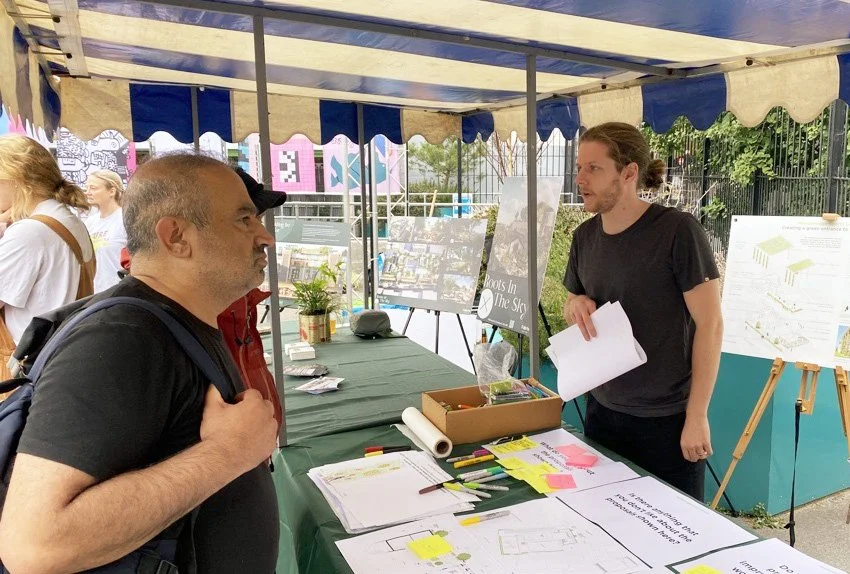
Daniel Bianchi, Cullinan Studio’s Circular Economy Lead, at an event to gather feedback from local stakeholders on the proposals for the rejuvinated Marlborough Sports Garden in the London Borough of Southwark.
Circular economy doesn't necessarily demand entirely new ways of thinking. In many respects, it asks us to rediscover skills and attitudes that have been part of designing and making for generations: resourcefulness, curiosity, and an empathy for materials.
What has changed is the urgency.
The construction industry is a major consumer of natural resources and a significant contributor to waste and carbon emissions. The familiar linear model of extracting materials, manufacturing products, constructing buildings and ultimately disposing of them is now impossible to justify.
Our resources are finite. We really need to use them well.
For Dan, this is what makes circular design an exciting creative challenge.
"Something that I find really exciting about circular economy is giving things a new lease of life."
A brick, a piece of timber or an existing structural frame may have already served one purpose, but that doesn't mean its useful life is over. By understanding the qualities of what is already there, we can discover opportunities that might otherwise be overlooked.
Circularity therefore becomes more than an exercise in reducing waste. It becomes a way of designing with greater creativity and imagination.
We’re designing to be good ancestors.
At Cullinan Studio, we approach circular economy thinking by looking first at how we can extend the useful life of buildings and materials.
Can an existing structure be retained and adapted? Can materials be reused on the same site, or carefully recovered for another project? If new materials are required, might suitable reclaimed resources be found locally?
These questions encourage us to see buildings not as finished objects with a fixed lifespan, but as evolving collections of valuable resources.
An existing building might have a sound structure but a tired interior. Rather than replacing everything, a careful assessment can identify what should be retained, repaired or repurposed.
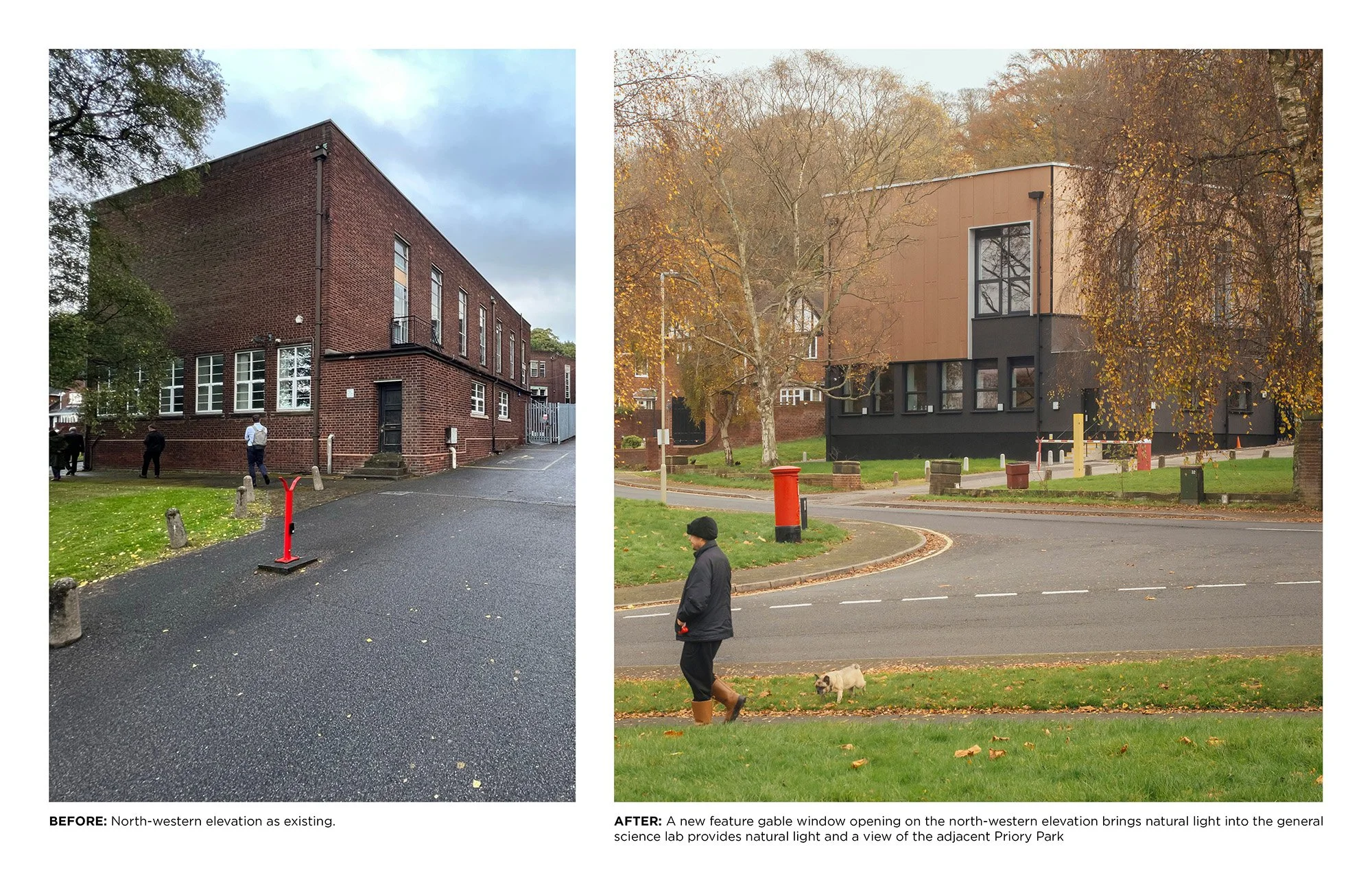
The original brief for the Animal Studies Centre at Dudley College called for demolition and new build. Challenging this new build approach, it was demonstrated that a sustainable retrofit could achieve the same functional outcomes with a far lower carbon footprint and for the same cost. The embodied carbon of the building’s structure was cut to just 51kgCO2e/m2, far below LETI school targets of 276kgCO2e/m2 (for a new build structure).
Equally, a building designed today should be able to accommodate the changing needs of our future generations. Adaptable layouts, durable materials and construction methods that allow elements to be maintained, replaced or disassembled can help buildings remain useful for decades.
Of course, working with reclaimed materials brings challenges. Designers must be flexible, and successful reuse relies on ultimate collaboration between clients, architects, engineers, contractors and suppliers. But those constraints can also prompt more inventive solutions.
Rather than making every material fit a predetermined design, circular economy thinking invites the design itself to respond to the materials available.
Marlborough Sports Garden: Putting circularity into practice
Our proposal for Marlborough Sports Garden, developed with Bankside Open Spaces Trust in Southwark, demonstrates how circular economy principles can inform a project from the outset.
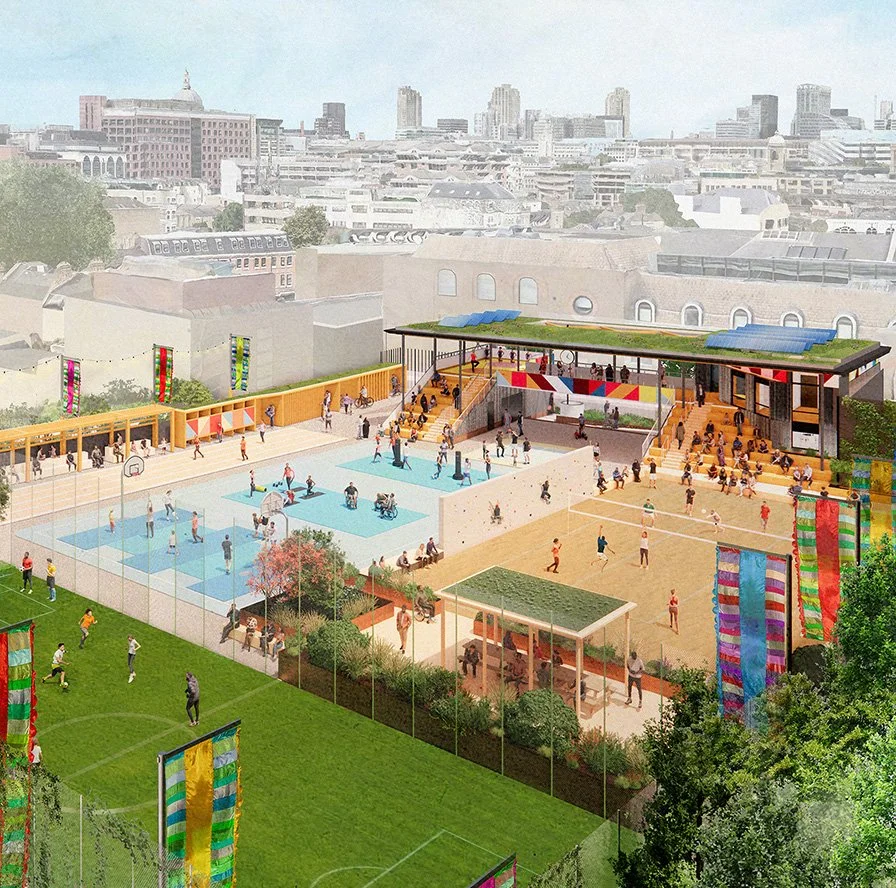
The ambition is to create an accessible, welcoming and adaptable community sports facility that supports health and wellbeing, while making use of existing structures and reclaimed materials.
For the design team, this has meant exploring opportunities to retain resources already on site and introduce reclaimed materials sourced through specialist suppliers.
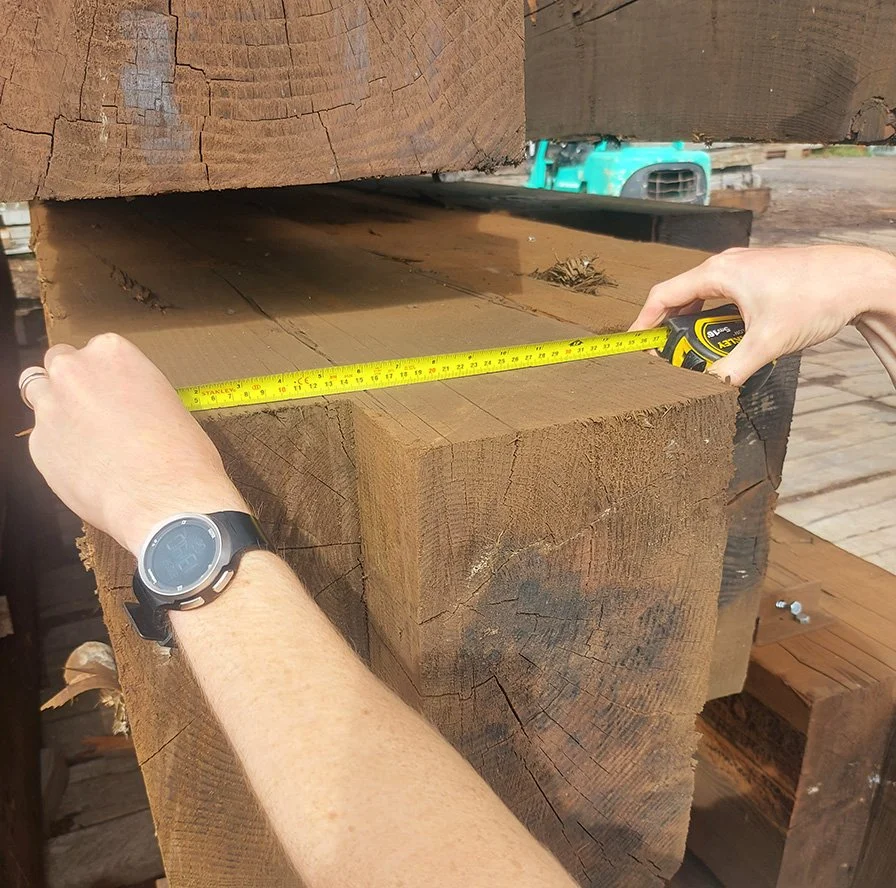
The proposals have considered reclaimed timber, brick and cladding, alongside a structural approach that can accommodate the varying dimensions of reused materials. Working with suppliers who understand the origins and properties of these resources allow us to make more informed choices about their suitability and environmental impact.
Material provenance is an important part of this process. Knowing where a material has come from, how it has been used and what treatment it has undergone helps us understand both its technical performance and its potential for reuse.
But, as Sam from the project team explains, circularity at Marlborough Sports Garden goes beyond the physical materials.
"I think circular economy to us is as much about materials and preserving existing structures as it is about the social circularity of projects."
The proposals seek to make the most of a valuable urban space, creating opportunities for local children and young people to access sport safely, while introducing flexible spaces that can support a wider range of community activities.
Studio spaces could accommodate yoga, indoor sports and clubs, while shared facilities would allow the building to respond to different users and changing needs over time.
The intention is not simply to create a building that uses fewer new resources, but to create a place that continues to offer value to its community. This is where environmental and social sustainability begin to reinforce one another.
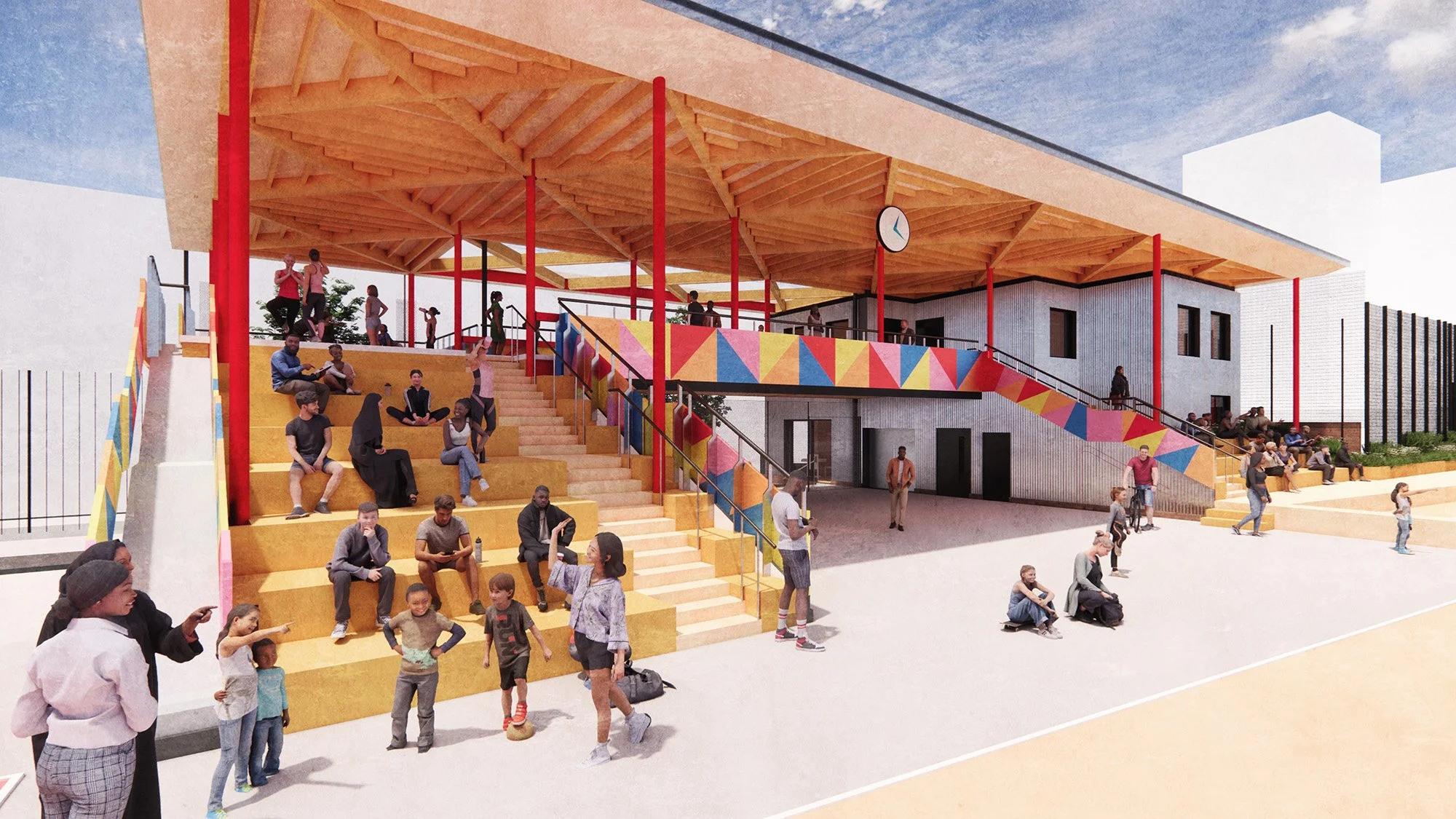
The proposed Community Hub at Marlborough Sports Garden in the London Borough of Southwark.
We understand materials have stories to tell.
Reclaimed materials arrive with a history.
There is a social dimension to this, too.
By retaining and reusing materials, we can preserve something of the memory of a place, even as its function changes. A building can evolve without losing its connection to what came before.
This doesn't mean every old material should be retained simply for the sake of it. Careful assessment and technical judgement remain essential. But recognising that materials have stories, as well as measurable properties, encourages a more thoughtful relationship with the things we build.
Making circular economy the norm, rather than the exception.
The principles of circular economy are increasingly well understood. The challenge now is to make them part of everyday practice, rather than exceptional achievements.
That requires changes not only in the materials we specify, but in the way projects are conceived, procured and delivered.
It means asking questions about reuse early enough to influence the design, and allowing time to understand existing assets, engaging with suppliers and contractors, and involving the people who will ultimately use and care for a building.
At Cullinan Studio, our employee-owned, collaborative approach has always been grounded in the belief that we can achieve more by working together. No single designer, supplier or organisation can deliver a circular built environment alone.
And while new technologies, material passports and better data have an important role to play, many of the essential tools are already available to us. As Dan puts it:
“Being a conscientious and collaborative designer, and enjoying the process of working together, are among the tools architects need to bring to the table”.
Circularity becomes more than an exercise in reducing waste. It offers opportunities for creativity, innovation and closer relationships between people and materials.
Our responsibility is to make the best use of what we have, while leaving more possibilities open for those who come after us.
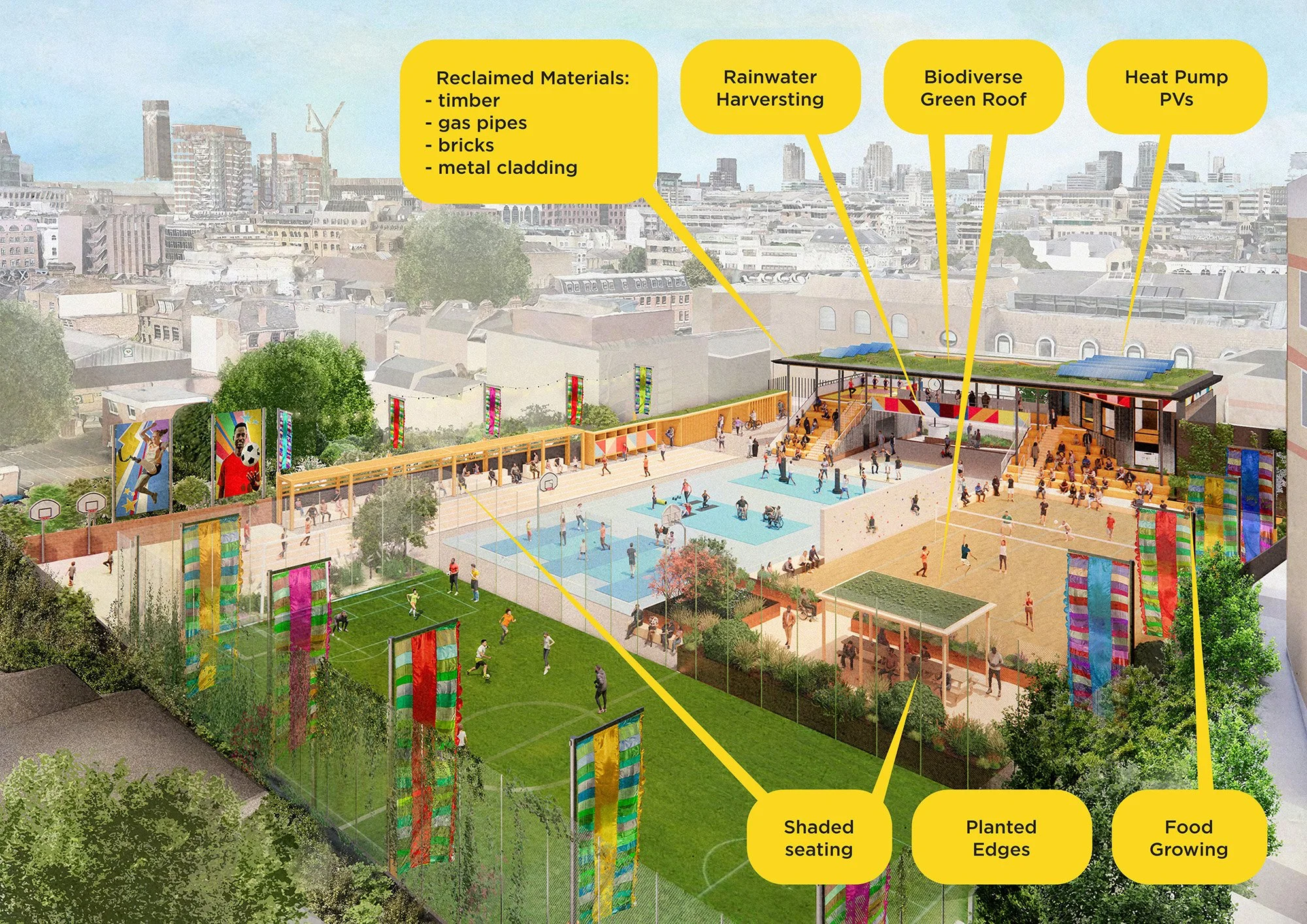
Marlborough Sports Garden proposals.